Safety & Operations
Aircraft Turnaround Process Explained: What Happens Between Landing and Departure
An aircraft on the ground between flights is often mistaken for downtime - but in reality, the turnaround is one of the most tightly coordinated…
Home › Safety & Operations › What Causes Turbulence — and Why Crews Are Not Worried
Safety & OperationsTurbulence is a common feature of air travel, but it is rarely a threat to the aircraft itself. The U.S. National Transportation Safety Board reported that between 2008 and 2023, turbulence-related accidents on U.S. air carriers resulted in 143 serious injuries and 218 minor injuries across 136 incidents. These injuries disproportionately affect passengers and crew who are not belted into their seats, rather than resulting from structural failure of the aircraft. Turbulence, in aviation terms, is a complex atmospheric disturbance with distinct types and altitudes, each with its own causes and mitigation strategies.
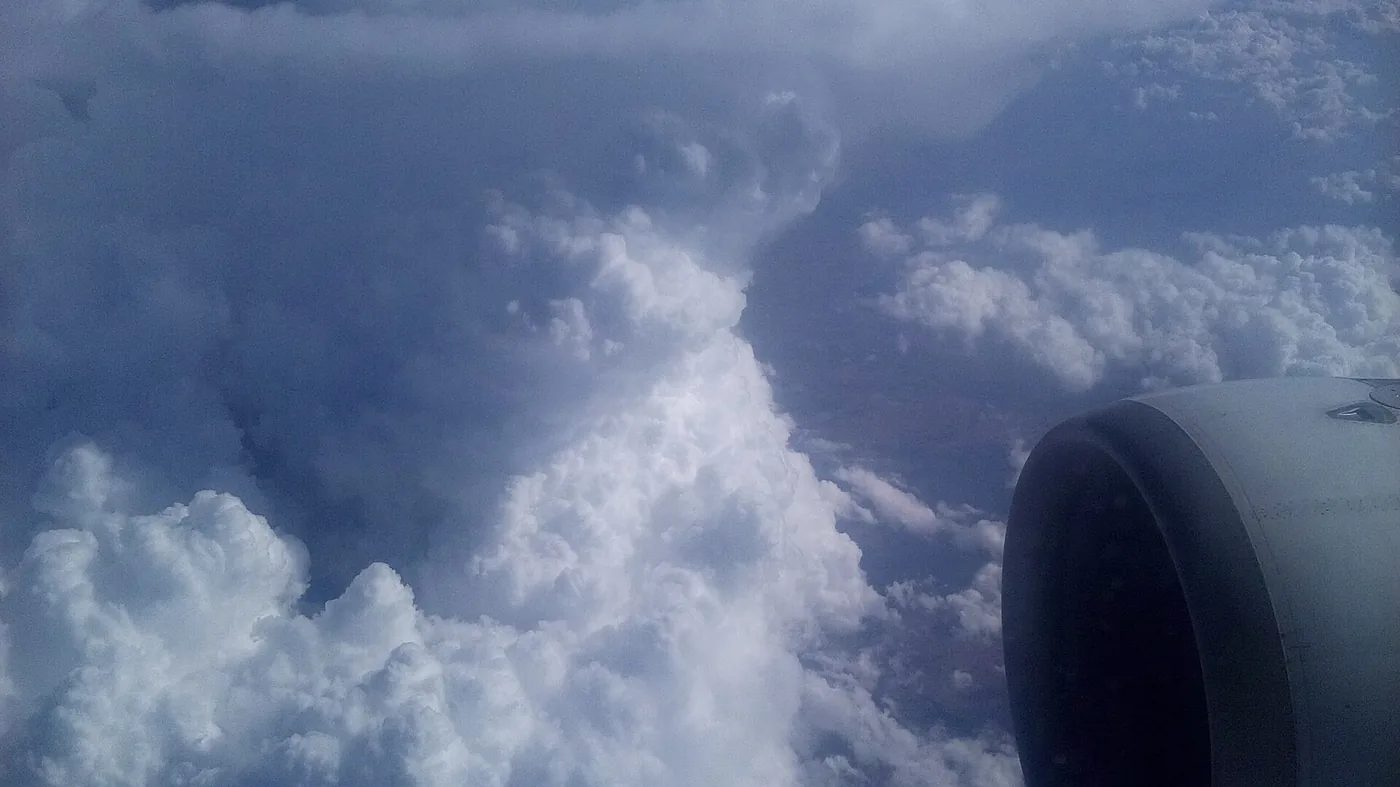
Turbulence is defined by the World Meteorological Organization as a disturbance in airflow caused by various factors, including convective currents, mechanical obstructions, and wind shear. The organization distinguishes between convective, mechanical, orographically induced, clear-air, low-level jet, and wake turbulence, each with its own typical characteristics and altitudes.
Convective turbulence arises from vertical convective air currents generated by differential heating of the ground, often associated with cumulus or cumulonimbus clouds and thunderstorms. It can extend from near the surface up to cloud tops. Mechanical turbulence, on the other hand, is caused by physical obstructions disrupting wind flow, such as trees, buildings, and mountains, and is most prevalent in the lower layers of the atmosphere close to the ground and around airports. Clear-air turbulence occurs in the absence of visible clouds, usually at medium to high altitudes, and is strongly linked to jet streams and wind shear near the tropopause.
Convective turbulence, whether associated with fair-weather cumulus or thunderstorms, is one of the most common forms of turbulence encountered by air travelers. It arises from solar heating and the resulting convective currents, with smaller bumps often felt on warm afternoons in clear skies. Pilots and operational manuals highlight that rising columns of warm air within cumulus clouds can affect climb and approach phases of flight, even outside of severe storms. In fact, thunderstorms and cumulonimbus clouds are associated with some of the most severe turbulence. Airlines use on-board weather radar and adjust their flight paths to avoid penetrating strong convective cells, where turbulence is likely to be extreme.
Mechanical turbulence is a result of physical obstacles, both natural and man-made, disrupting the smooth flow of wind in the lower layers of the atmosphere. This type of turbulence is primarily a concern for the climb and descent phases of flight, most notably in the vicinity of airports. High winds around buildings, irregular terrain, and the like can cause bumps as an aircraft banks, for example turning off or on runway. Wake turbulence, meanwhile, is generated by aircraft in flight, specifically the vortices that trail from an aircraft's wingtips. These vortices can reach speeds of around 300 km/h and are most hazardous when smaller aircraft follow or cross behind heavy aircraft during takeoff and landing. For this reason, spacing between successive aircraft is carefully managed, especially at high-traffic airports or under windy conditions.
Clear-air turbulence (CAT) is the bane of nervous flyers, because it can occur in clear skies with no visual warning. Defined as medium- or high-level turbulence not associated with clouds, CAT most often forms between 20,000 and 50,000 feet, driven by wind patterns such as jet streams and wind shear. The Hong Kong Observatory reports CAT as occurring at 20,000 feet or above, with reports classified when no thunderstorms or significant clouds are present within a degree of the aircraft's position. What makes CAT particularly challenging is that, unlike convective turbulence, it does not show up on weather radar. So if a plane suddenly encounters it, pilots were likely not able to foresee and avoid it. Studies of CAT show it arises when an aircraft crosses between air masses with differing wind directions or edges of jet streams, emphasizing the importance of modern jet stream forecasting and real-time pilot reports.
Turbulence forecasting and planning is a key part of modern air travel, supported by meteorological and operational guidelines that break turbulence down into its main types. This allows for targeted forecasting, as well as communication of risks and expected flown altitudes to pilots and cabin crew. Convective turbulence, being cloud-visible, can be avoided by adjustning the aircraft's course with on-board radar detection. Mechanical and wake turbulence, being focused around airports, is mitigated with increased spacing between flights and procedures for takeoff and landing. Clear-air turbulence, given its invisibility, is managed through real-time pilot reports and weather pattern analysis. The goal is not to eliminate turbulence, but to predict its intensity and location, so that crews can reduce turbulence exposure through route changes and altitude adjustments. Passengers, for their part, as the aircraft speeds up, slows down, climbs and descends, sense the turbulence.
While turbulence intensifies the challenges of flying and serving, it is primarily a cabin safety concern, not a structural one, which speaks to the robustness of modern aircraft manufacturing. From 2008 to 2023, passenger and crew injuries from turbulence on U.S. airlines accounted for 143 serious and 218 minor injuries across 136 incidents. Those injuries primarily involved cabin occupants who were unbelted, standing, or walking. Injuries are the most common severe consequence of turbulence when passengers are unbelted or standing. This underscores the importance of keeping seatbelts fastened whenever seated, regardless of whether the seatbelt sign is illuminated. The sign itself is effectively a warning that passengers should return to and remain in their seats, as captains and crews activate the sign when turbulence is anticipated, based on weather and pilot reports. As with clear-air turbulence, pilots cannot directly see the turbulence ahead. The seatbelt sign is not an indicator that the captain has noticed turbulence.
Turbulence is a complex atmospheric phenomenon with several well-understood types and robust forecasting/avoidance procedures, and is most consequential for passengers when they are unbelted or standing.
Why we published this. A calibrated sense of what turbulence is, what crews do about it, and what genuinely matters.
An aircraft on the ground between flights is often mistaken for downtime - but in reality, the turnaround is one of the most tightly coordinated…
In the United States, the first factor in achieving the career of an airline pilot is the 1,500-hour rule. Under federal aviation regulations, both…