
Safety & Operations
What Causes Turbulence — and Why Crews Are Not Worried
Turbulence is a common feature of air travel, but it is rarely a threat to the aircraft itself. The U.S. National Transportation Safety Board…
Home › Safety & Operations › Aircraft Turnaround Process Explained: What Happens Between
Safety & OperationsAn aircraft on the ground between flights is often mistaken for downtime - but in reality, the turnaround is one of the most tightly coordinated sequences in any airline operation. From the moment the crew reports the wheels down or touchdown to the moment chocks are removed for pushback, every arrangement on the apron is optimized for speed and ease of the departure to follow. The International Air Transport Association’s Ground Operations Manual includes extensive guidance on turnaround, with Chapter 4 dedicated to aircraft arrival, aircraft doors, and departure - but this is a complex operation that requires dozens of tasks across the apron to slot correctly. There are still gaps and variances in operational scripts, but airlines broadly follow the same core process to transform a plane from disembarkation to dispatched.
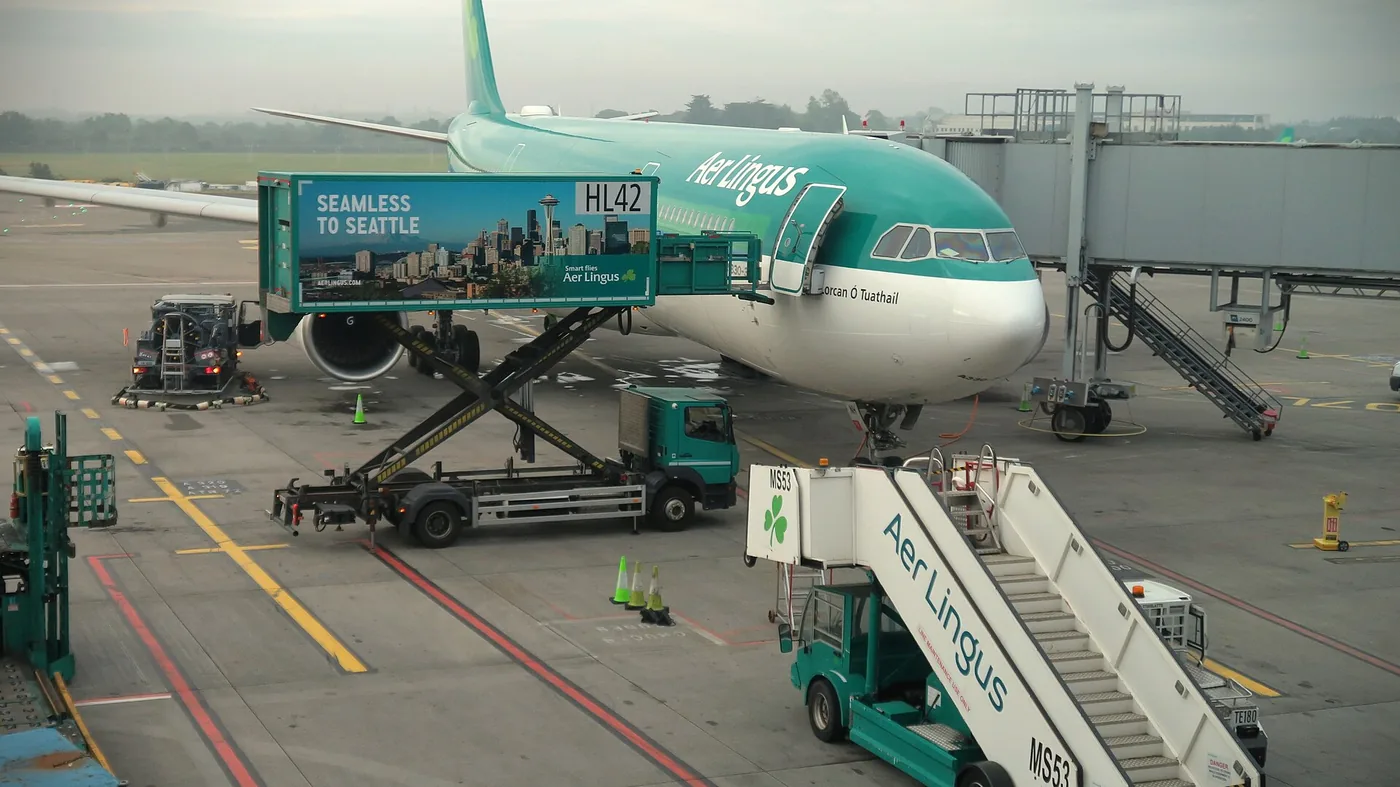
Passengers may see the turnaround as idle time - but to airline operations teams, the window from landing to pushback is a series of sequential tasks that begin the moment arresting chocks are placed. The International Air Transport Association specifies turnaround in Chapter 4 of its Ground Operations Manual, and IATA describes the manual as defining minimum standards that drive global standardization and reduce complexity between airlines, airports and handlers. A normal turn at a busy airport is a complex balance of actions by flight crew, ground staff and handlers that include passenger embarkation and disembarkation, cargo and baggage offloading and loading, aircraft cleaning, servicing, fueling, and catering. And it is an increasingly modular process.
What’s immediately noticeable when passing an aircraft on the tarmac is the activity happening around it. On arrival, an aircraft is guided to a parking position, referred to as the bay, where chocks are placed to arrest the wheels and signaling that the turnaround starts. From there, a single aircraft may experience a dozen different handlers as flight crew, ground personnel, fuelers, de-icer trucks, luggage handlers and catering staff mob around it to prepare for the next flight.
Passenger disembarkation and reboard begins while the cabin is being cleaned. Lavatories are serviced, garbage bags are removed, and seats are given a once-over to ready for the next set of travelers. Cabin crews will usually be given a heads-up about what portions and beverages are on the next manifest, to expedite meal preparation. Cargo and baggage handlers work in parallel to offload and pack the cargo holds, followed by loading once the runners are free. Loading is usually meter-by-meter, as the luggage and freight is arranged to balance the mass and moments that the flight crew will be given to calculate.
Beyond cleaning and cargo, a plane’s time at the gate is a sequence to replenish its body. Its tanks are topped with potable water, which also fills the lavatories, catering is loaded and secured, and fuel is uplifted if required for the next leg. These are all timed actions, but they do not happen in a straight line. Loaders and catering may be done while the cleaning crew is still working. But the aircraft needs to be entirely free and secured before it can be released, so all actions between the chocks must be done within an agreed turn time.
Once the remaining passengers and cargo have been loaded, the aircraft is reset for departure. Hatches are checked and closed, followed by the cabin doors and cargo hold doors. Safety detents are removed if used, and finally, the preflight checks are made to verify that the aircraft is ready to go. It may be towed away to the run-up or connected to the pushback point, where the tug then hooks up to pull it from the apron.
The entire process involves a complex dance between the airline’s ground crew and handlers to coordinate, as a heavy plane that’s run out of fuel or has a weak battery will sit at the gate. Exactly when this handoff happens, and how the final verification of figures is done, can vary between airlines, airports and turn types. One study specifies that a turn is between the moment the chocks are placed and when they are removed, The takeaway point is that at some point, the weight, load distribution, and fuel-required for the next leg must all be validated so that the flight crew are legally cleared to take off.
It’s easy to forget how much happens in the turnaround of a plane that’s been parking for only a few minutes. The balance between cleaning, luggage, fuel and flight crew handover is precarious, and requires every vendor to keep to their piece in an agreed timeframe. But it’s more than most people understand. Loading and servicing actions run parallel, but fueling and utility checks usually have to run sequentially. As a sequence, this means that one small issue—faulty cabin lighting, a missing fuel line, an out-of-gauge manifest—can snowball into a grounded flight.
Who signs off each part of this chain varies between airlines, and verification of load figures is rarely a stated task in material consulted. But the key is coordination and communication. An aircraft being serviced isn’t responsible for any one function.
What’s clear after unpicking the turnaround process is that a plane is under constant work. Its time at the gate is not a break, and its location is important - the bulk of the work needs to be done in close coordination to minimize ground handling time. The constraint is sequencing, coordination, and communication, but this isn’t something the average person can see. The link between these actions creates a bottleneck, and only when the last utility is connected and the final sign-off obtained will the crew be cleared to take off. In any airport, the turnaround is where coordination matters most - and it’s all before the passengers reach security.
Why we published this. A concrete picture of the ground operation that decides whether the next flight leaves on time.
Turbulence is a common feature of air travel, but it is rarely a threat to the aircraft itself. The U.S. National Transportation Safety Board…
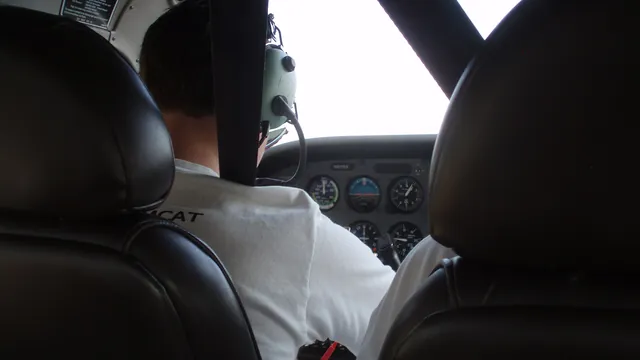
In the United States, the first factor in achieving the career of an airline pilot is the 1,500-hour rule. Under federal aviation regulations, both…