How Airline Ticket Pricing Works: Fare Buckets, Revenue Management and Why the Price Changed Overnight
Trying to book a flight? You’re not alone. With so many booking sites offering different pricing at any given time, the quest for the lowest fare can feel like an automated guessing game. But how do airlines really decide what you pay?
Airways Center desk·1 September 2026·897 words
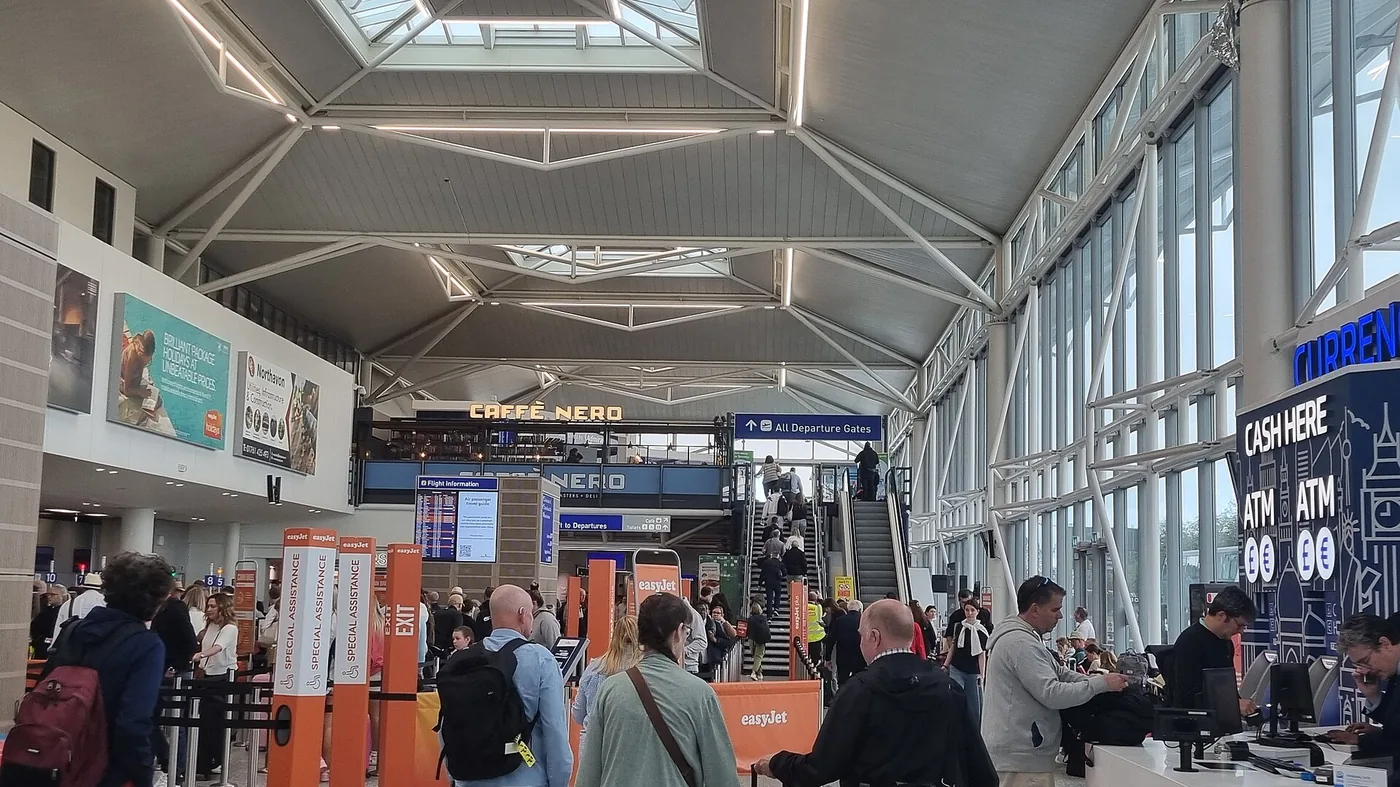
Photo: Check-in hall, Bristol Airport, Somerset, England in July 2024 — Captain Galaxy, CC BY 4.0 (Wikimedia Commons)What this piece covers
In short, your cookie status and incognito browsing habits don't factor into the price.10[2] Airlines use inventory management systems at the server level—hundreds of thousands of feet below your browser. These systems divide seats into fare buckets, each with its own price and restrictions.[9]1511 Clearing cookies doesn't reset bucket availability or cause a specific price to regenerate. Unless the inventory or fares themselves change, the price you see isn't influenced by your shopping habits, but simply by the state of sales and availability at the moment you search.
The Hidden Architecture of Airline Fares
The fare-bucket system structures airline pricing down to the letter. From high-fare, flexible "full Y" to low-fare, highly restricted "V/Q/B" and promotional "X" seats, each lettered booking class ties to a fare level and set of rules. Confusingly, tickets with the same fare can land in different buckets, each triggering different conditions. Booking classes are the foundation of both manual and automated pricing, no matter what booking site you use.
In 2006 MIT OpenCourseWare notes described class M as tied to a 7-day advance-purchase round-trip excursion fare, Q to 14 days, and V to 21 days or special promotions. These advance-purchase "fences" helped airlines segment leisure and business travelers, one coding each set of rules into the fare product.[9]
Revenue Management, Not Mind Reading
Let's face it – fares look personal. See a price online, book later. Poof! It changed. Partner with a family member, and voila! Different price points. Algorithms to the rescue? Nope. Your cookie status and incognito browsing habits have never changed fare pricing. Real-time revenue management, on the other hand, shifts prices every few minutes in reaction to seat availability, competitive moves, time until departure, and historical sales.
Revenue systems don't get your name, let alone know Mr. Smith is showing more urgency than Ms. Doe. Linked to the airline servers, not your local cookies, the algorithms manage availability down to the hour, and fare level. No individual employee is creating fare classes, but rather, massive historical datasets drive the parameters. If you want to dream about what kinds of tickets are accessible, note that fare buckets and timing rules are critical markers.
In Alibaba Product Insights, airlines downplay cookies, mind reading, and local machine learning for price increases:
"We use historical data and live signals to manage prices, not device IDs or browser cookies. Clearing cookies doesn't impact the prices you see."
Why the Price Jumped Overnight
It never fails. "Why did the price go up overnight?!" in quick, all-caps frustration. But that steep jump isn't because you read comparisons from five different websites or shared your search link with a friend. Fare bucket depletion causes these dramatic price shifts, simple as that. When "PF" or "V" sells out, the fare machine opens up a new bucket at a higher price. The cheaper bucket might count 3-5 seats for the rest of the day, and your friend or the next browser search will see the next, higher-fare bucket open.
Looking deeper, MIT's revenue management explains how airlines set advance purchase cut-offs for discount fares; higher-fare "full" tickets are typically unrestricted. Booking classes link fare prices with rules such as advance purchase, refundability, a Saturday night stay, or minimum stay requirement, attracting different customer segments. When "Q" isn't available, a user's best next option is "Y". Advance purchase requirements fence lower fares for leisure travelers who plan ahead.
Debunking Cookies and Incognito Folklore
Are cookies and incognito research just outdated tech myths? Did you fall for it?
It's happened before. In 2014, researchers set out to ask: "Do browser cookies really affect flight prices?". So, they set up an experiment. The study collected prices on 41 routes flown by United Airlines (UA), American (AA), and Delta (DL). In the end, they didn't find a noticeable pattern between cookies and prices. Bookings from 'regular' and 'incognito' made no difference. UA prices stayed the same, while DL and AA were the most variable.
So, they say, stop worrying. It doesn't impact your flight prices. In most cases.
In 2014, the Janeway study "Do Browser Cookies Really Affect Online Airline Ticket Prices?" turned up a long list of flags: 372 searches on American, Delta, and United found 42 cases of cookie impact. However, the difference was minor. Incognito mode was cheaper 25 times, and more expensive 17 times. And they weren't the first.
Daily Mail debunked the idea, with reference to travel experts: More research. "The combination of private or blocked cookies didn't achieve 'cheaper' more often than usual. And cookies and search history don't consistently cause any price increase."
Timing Your Purchase Without Superstition
Simply put, clearing your cookies won't change the fare buckets you're seeing. It's also not a bad idea to do some planning.
Experts, for their part, recommend that seasonal and event bookings be locked in as soon as available. There is a commonly cited "optimum booking window: the period around which the lowest prices are usually found." Around three to four months out, prices are often low, and availability is high. When a booking window opens, the low-window price multiplies, and offer ends quickly.
The bottom line? Book in advance, and personalize it. If you want a big discount, you should book far in advance with your orphaned cookies. A pittance at best, but the best we have.
Recap: yes, we still don't need incognito mode. See?
Why we published this. A correct mental model of fare buckets that makes booking decisions less superstitious.