Aircraft & Tech
How to Read an Aircraft Tail Number
Finding yourself on a flight and realizing you’ve booked a seat on a particular aircraft is a common experience. And yet, despite its appeal to many…
Home › Aircraft & Tech › What's the Difference Between Narrowbody and Widebody Aircra
Aircraft & TechWhen comparing flight itineraries, one factor that can affect the overall passenger experience is the type of aircraft used for the route. Among the most important distinctions is whether the flight is operated by a narrowbody or widebody aircraft. But what exactly does that mean for the passenger, and for the airline operating the flight?
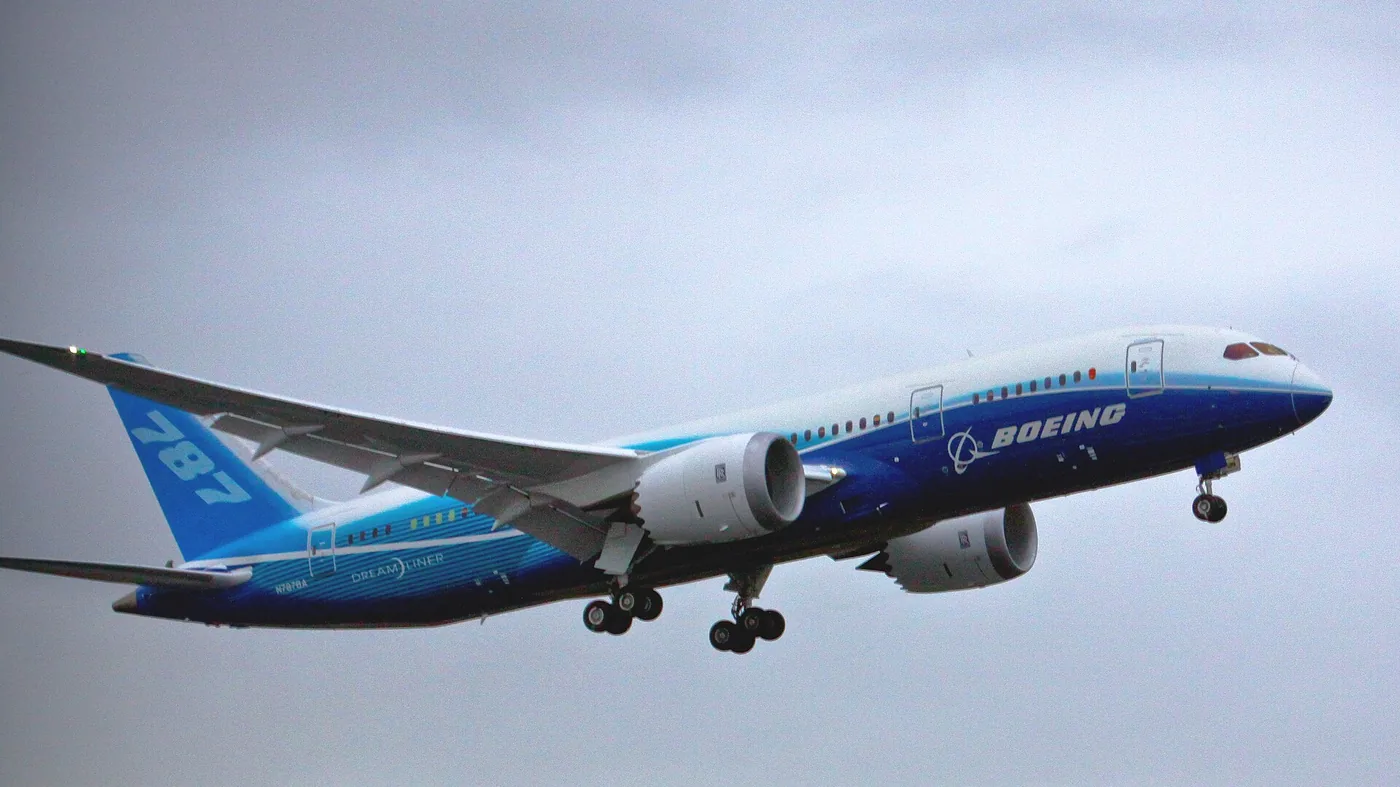
A widebody aircraft, also known as a twin-aisle aircraft, is defined as an airliner with a fuselage wide enough to accommodate two passenger aisles with seven or more seats abreast, while a typical narrowbody aircraft has a fuselage diameter of 3–4 m (10–13 ft), a single aisle, and between two and six seats abreast.
Widebody economy cabins typically seat from 7–10 across, allowing total capacities of 200 to 850 passengers: 7-abreast aircraft typically seat 160–260 passengers, 8-abreast 250–380, and 9-to-10-abreast 350–480. In contrast, narrowbody fuselages are generally about 3 to 4 m wide, seating up to 6 passengers per row in a single aisle and accommodating 100–200 passengers.
Narrowbody aircraft are typically used for short to medium-haul flights of up to 5000 km or so, while widebodies are typically used for long to ultra-long haul. However, long-range variants of narrowbody aircraft such as the Airbus A321XLR, which can fly up to 4,700 nm (more than 8,700 km), are increasingly operating routes previously flown exclusively by widebodies, such as many transatlantic routes.
So what do these geometric distinctions mean for the passenger?
For one, sitting in a narrowbody's cabin, there is a smaller number of people between you and the aisle. For example, the A321XLR's 6-abreast mainline layout results in a 6:1 seat-to-aisle ratio: there are 6 passengers using each aisle to reach their seats. By contrast, a 10-abreast widebody like a Boeing 787 results in a 5:1 ratio, and an 8-abreast 4:1. This has practical implications: you don't have to walk past as many people in the aisle to get to your seat. It also means you are less likely to be delayed by other passengers trying to reach their seats if you are behind them in the queue when boarding.
That said, fewer people using each aisle to reach their seats does mean that, during boarding, each aisle is busier. In the A321XLR, 6 people will be using an aisle to reach their seat, while on the 787 or A330, there will be 5 and 4, respectively.
This discernible difference matters to airlines, because airports and aviation authorities impose constraints on the maximum time an aircraft can remain on the ground between flights, turning around to pick up new passengers and prepare for the next flight.
A turnaround time simulation study reported that, based on actual medium-range single-aisle operations, "the operation cost of a typical medium range single aisle commercial transport aircraft will increase $30 if it stays on ground for one more minute, leading to $1 million increase in its life cycle cost," for the additional ground time. An experimental boarding-method study shows each minute saved in the turn-around time of a flight has the potential to generate over $16,000,000 in annual savings, assuming an average of 1,500 flights per day.
Widebodies also have more carrying capacity, in terms of passengers, and cargo. The typical widebody is 4.7 to 6.5 meters across, compared to the 3 to 4 meters of a narrowbody, the extra carrying capacity allows them to fly more routes including routes where they can pick up freight.
This has consequences: for passengers, it means widebodies can often give more storage room, more toilet facilities, and more entertainment and business centres like bars and lounges, in the cabin. However, it also means that airlines might be heavily incentivized to fly widebodies on routes, even short ones, where they can pick up cargo and make the flight economically viable rather than using narrowbodies - even if the flight is at 50% capacity. Passenger numbers and your comfort might be sacrificed for carrying capacity.
So if you are a passenger, looking at flights, what can you take away from this?
Today, several airlines require passengers flying in a widebody to have a checked-in destination tag for their cabin baggage. This is because the cabins are not always deep enough. In addition, they also speed up boarding because they have more aisles, which can be advantageous if you are traveling in a group or need to board/arrive at the airport early.
However, this speed in boarding will usually mean each individual aisle will be busier. Selecting an aisle seat might therefore offer advantages in getting past slower boarding passengers.
As a general rule, if you are looking at comparing a widebody and a narrowbody, you might conclude that a widebody on a route is likely there to make money off the freight and the passengers, and will give you extra luggage and toilet facilities in return, while a narrowbody on a route is likely an efficient schedule choice.
Seats, storage, amenities and scheduling can all be influenced by the choice of aircraft, even if the body shapes don't seem to have changed much in more than a century.
Why we published this. A basis for choosing between two itineraries by aircraft type rather than by brand.
Finding yourself on a flight and realizing you’ve booked a seat on a particular aircraft is a common experience. And yet, despite its appeal to many…
Sustainable aviation fuel, commonly known as SAF, is a busy buzzword with airline CEOs and environmentalists, but it came in at a mere 600 million…