Airports & Hubs
Hub-and-Spoke vs Point-to-Point: Why America's Flights Are Built the Way They Are
It's a frustration most frequent US travelers will recognize. You're looking for a flight from your city to a destination that seems like it should…
Home › Airports & Hubs › How Air Traffic Control Uses Separation Standards to Keep Yo
Airports & HubsIf you’ve ever waited at a gate and heard that your flight is “waiting for a slot,” it’s easy to assume that the cause of the delay is some invisible force — the airline, the weather, even the airport itself. In reality, the route your plane takes, the spacing it maintains with other aircraft, and the delays you experience are governed by a precise, documented set of rules applied by the people who provide air traffic control.
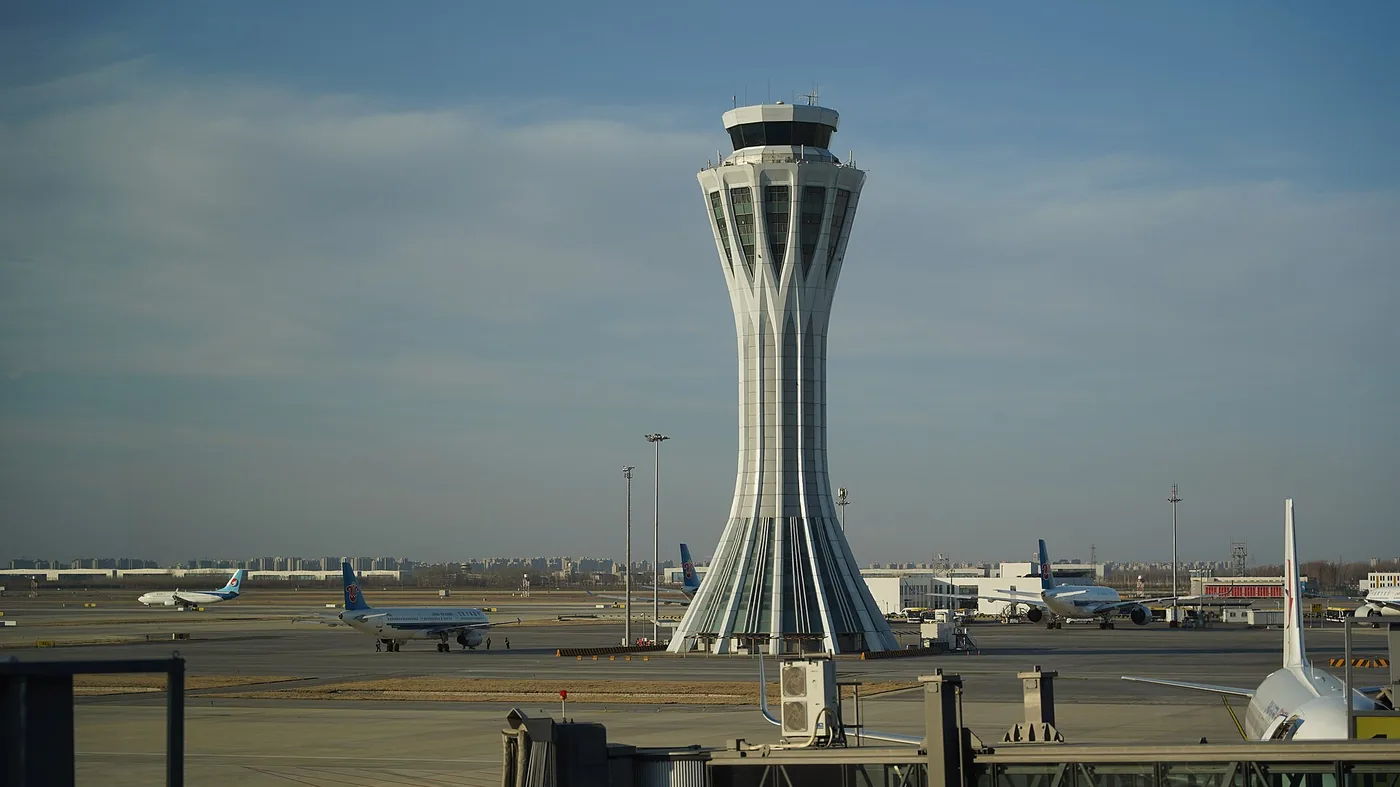
Federal Aviation Administration (FAA) Order JO 7110.65 provides the codified rules followed by air traffic controllers in the United States, from clearance and taxi through takeoff, cruise and landing. Traveling through airports, you’ll see the tower, approach and departure control positions; but when you’re en route, that work remains unseen. En route air traffic control centers cover the entire country and maintain order using the procedures outlined in JO 7110.65.
U.S. air traffic control also aligns with international procedures to ensure order and safety. ICAO Doc 4444, the global Procedures for Air Navigation Services – Air Traffic Management, provides the basis for much of the FAA’s approach to separation and control. Radar separation capabilities define how aircraft are spaced horizontally, while vertical separation minima, based on constant flight levels, govern how flights are stacked in the sky.
This isn’t just theory. Doc 4444 sets a horizontal separation minimum of 5.0 nautical miles (9.3 km) under certain radar and surveillance conditions, such as parallel approaches. Vertical separation minima set a nominal 1,000 feet (300 meters) below flight level 290 and 2,000 feet (600 meters) at or above FL 290—a standard reflected in the U.S. from the ground-floor clearance delivery phase through the air route traffic control centers.
In the U.S., detailed radar separation instructions are articulated in JO 7110.65. Radar separation between aircraft in terminal areas is typically 3 nautical miles when using a single sensor airport surveillance radar, when targets are less than 40 miles from the antenna, and 5 nautical miles when they are 40 miles or more from the radar antenna. These minima reflect the precision control required to stack flights coming in and out of a single area, and they mean that each of those floors of the sky is really only a few miles wide in practice.
In the terminal area, smaller radar separation minima make for more stacked flights, but higher altitudes allow for larger separations. This is where the common vertical separation minimum of 1,000 feet is applied, along with additional spacing for special cases. When a Boeing 757 or large aircraft is departing in front of a heavy or super-heavy, such as an A380, JO 7110.65 requires increased wake-turbulence spacing accordingly. B757s that are departing or approaching ahead of light aircraft require 5 NM. Clearly, variety in aircraft type and size naturally creates variety in the separation requirement. There's more airspace between heavier jets.
How, then, does the influx of daily flights stack and traverse this precisely charted system? The answer is as documented as the separation minima. Ground-to-air handoffs.
Start-to-end, with hand-off dangers and coordinated maneuvers, air traffic control puts on a show of careless efficiency. Bringing together flights of different speeds, categories, shapes and sizes in the same area at the same time without conflict, with the possibility of critical events affecting the network, is a famous headache in the eyes of the controllers. But the daily chaos is sedated by prioritized frames of information and a good night's sleep.
So when your plane isn't moving from its gate, or when the pilot's tone grows thick and low as you descend, chances are the forces behind the noise are the forces behind the flight itself: documented, mapped and ruled by clearly defined procedures for safe and efficient control.
Why we published this. A map of who controls an aircraft at each stage and where delays are generated.
It's a frustration most frequent US travelers will recognize. You're looking for a flight from your city to a destination that seems like it should…
Airport codes can seem like an arbitrary jumble of letters, especially when you're in a rush to book a flight. But the three-letter codes managed by…